

Beyond Fluoride Varnish: Why SDF Might Be Your Kids' Caries Arrest Tool
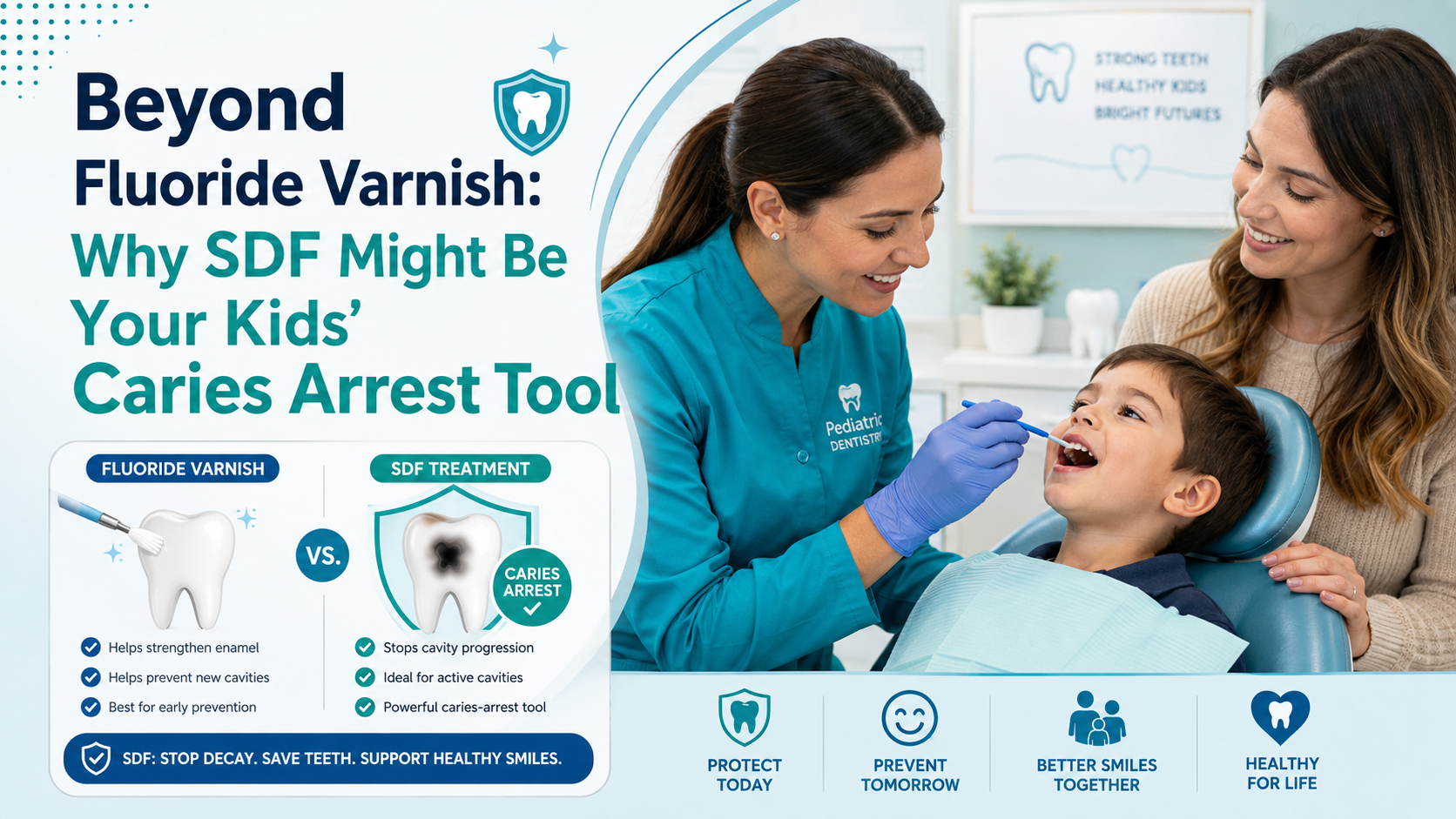
Cavities in children are one of the common pediatric dental issues that, if left unattended, leads to decay and other complex issues. For years, the primary non-invasive defense was fluoride varnish, a helpful preventive technique. However, at times, these fluoride varnishes too cannot stop an active, deep cavity in its tracks. This is where SDF treatment for dental caries comes in.
While fluoride varnish acts as a protective shield to prevent decay, SDF is more like a high-powered caries arrest tool. This significant treatment can stop tooth decay in children without a single drill bit touching the tooth. If you are looking for a non-invasive caries management for your child’s dental health with less stress, understanding SDF becomes essential.
What Exactly is Silver Diamine Fluoride?
SDF treatment for dental caries is a clear, odorless liquid that combines the antimicrobial power of silver with the remineralizing strength of fluoride. In addition, it consists of three primary components:
Silver (Ag)
The main component acts as a potent antimicrobial agent that kills the bacteria causing the decay.
Fluoride (F)
In silver diamine fluoride dentistry, the fluoride assists in remineralizing and hardening the remaining tooth structure.
Ammonia (NH_3)
It acts as a stabilizer to keep the silver and fluoride in a high-concentration liquid form.
Fluoride Varnish vs. SDF: The Critical Difference
Many parents confuse fluoride varnish and SDF treatment for dental caries as two treatments because both are "painted" on the teeth. However, their roles in your child's mouth are fundamentally different.
The Working of Silver Diamine Fluoride
SDF treatment for dental caries in children works in the following ways to offer its lasting protection.
The Antimicrobial Strike
Apart from SDF staining teeth, when applied to a cavity, the silver ions penetrate the decayed dentin. These ions disrupt the cell walls of Streptococcus mutans (the primary bacteria responsible for cavities), denature their proteins, and inhibit their DNA replication.
Hardening the Tooth
The SDF chemical creates a surface that is significantly harder and more resistant to acid than natural tooth enamel. This scar tissue prevents the cavity from digging deeper into the nerve.
Benefits of SDF Treatment for Kids
SDF, the non-invasive caries management procedure, benefits the oral health of your child in the following ways.
No Drills, No Needles
For a young child or a child with special needs, the sound of a drill or the sight of a needle can be traumatic. Significantly, the SDF treatment for dental caries requires neither. It is simply painted on with a micro brush.
Aerosol-Free
Parents must know that Silver Diamine Fluoride dentistry is also aerosol-free. It is the mist created by drills that might affect the patient, so the treatment is a win win for both the patient and the dental team.
Time-Efficient
The caries arrest using SD takes about 60 seconds. Essentially, it is a one-minute procedure, making it a successful pediatric preventative treatment option.
Cost-Effective
SDF treatment for dental caries is significantly cheaper than traditional fillings or crowns, making it an accessible option for families without extensive dental insurance.
The Visual Side Effect of SDF Treatment
Though SDF treatment for dental caries proves to be beneficial for young children. However, SDF still reacts with the decayed part of a tooth, turning that area permanently black.
The following are a few ways to manage one of the significant side effects of SDF:
Posterior Teeth
If the cavity is on a back molar, the SDF staining teeth might not affect the aesthetics of your child. It is usually invisible during normal smiling and talking.
The SMART Technique
Silver Modified Atraumatic Restorative Treatment" (SMART) involves applying SDF to arrest the decay. It is one of the effective techniques to manage the side effects of SDF as it covers the black spot with a tooth-colored material like Glass Ionomer Cement (GIC).
In The End
SDF treatment for dental caries in children represents a shift toward minimally invasive dentistry. Specialized pediatric dentists no longer believe that every hole in a tooth requires a drill. By using chemistry instead of mechanics, children and parents can be made comfortable in terms of dental anxiety and cost factors. Therefore, before opting for costly procedures, parents can check simple techniques and save their child from undergoing immense pain.
Why Choose Little Forest Pediatric Dentistry?
Little Forest Pediatric Dentistry is dedicated to creating a positive, supportive dental experience for children and their families in Corona, CA. We foster an inviting environment where parents are active partners in care, and children feel safe and encouraged. Our trained experts not just educate but also provide personalized attention so each child can have lifelong good oral health habits.
Frequently Asked Questions (FAQs)
Q1. Can SDF be used on permanent teeth?
Yes, it is most commonly used on baby teeth to avoid invasive procedures in toddlers. It is highly effective on permanent molars that are sensitive or difficult to numb. Moreover, it is also an excellent tool for elderly patients dealing with root cavities.
Q2. How long does SDF treatment for dental caries last?
SDF stops decay immediately, and the effect, too, can wear off over time. Clinical guidelines typically recommend reapplication every 6 to 12 months to ensure the cavity stays arrested. However, if the area feels soft during a check-up, your dentist will likely suggest another drop.
Q3. Can my child eat immediately after the SDF appointment?
In most cases, yes. SDF dries very quickly. However, many dentists apply a layer of fluoride varnish over the SDF to seal it in and mask the metallic taste. If varnish is used, your child should wait about 30 minutes before eating or drinking, and avoid crunchy or hot foods for the rest of the day.





Frequently Asked Questions

Request an Appointment
Corona, California 92883